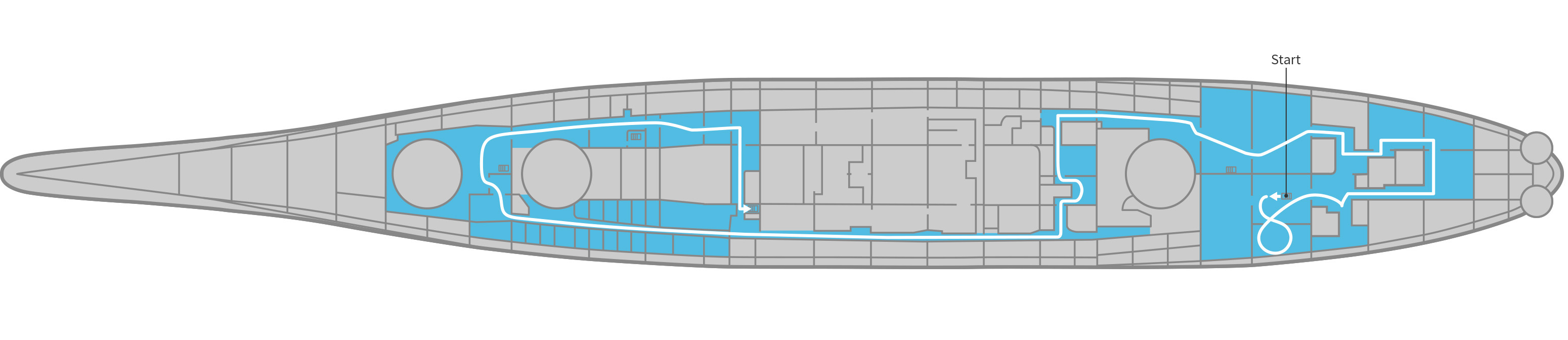
map
  • Crew's Mess

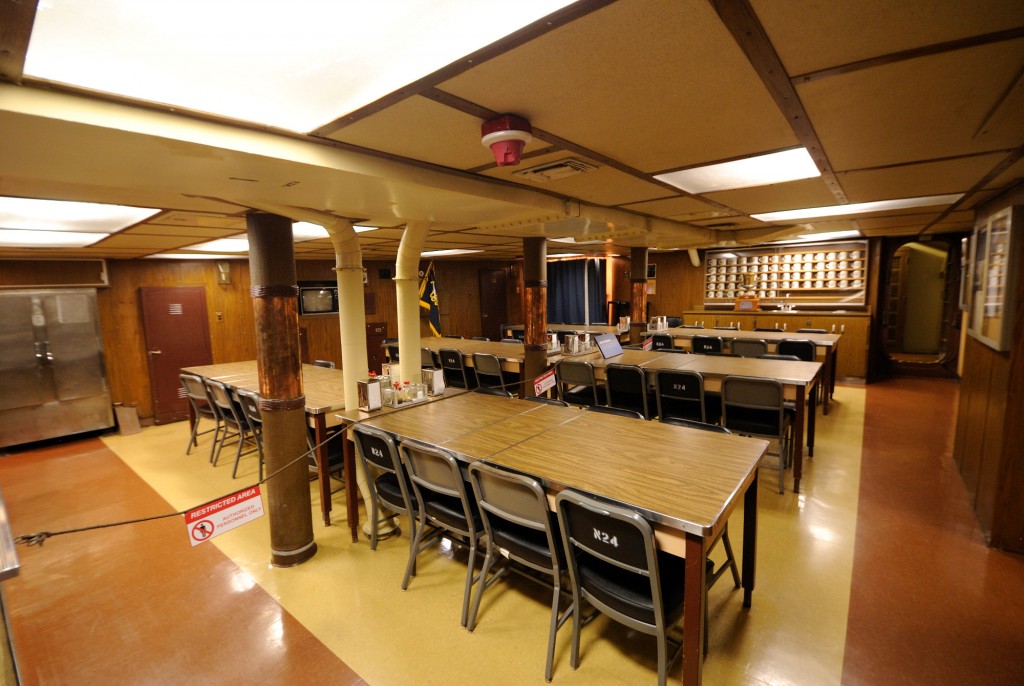
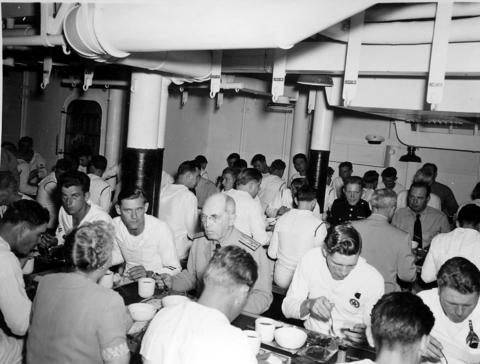
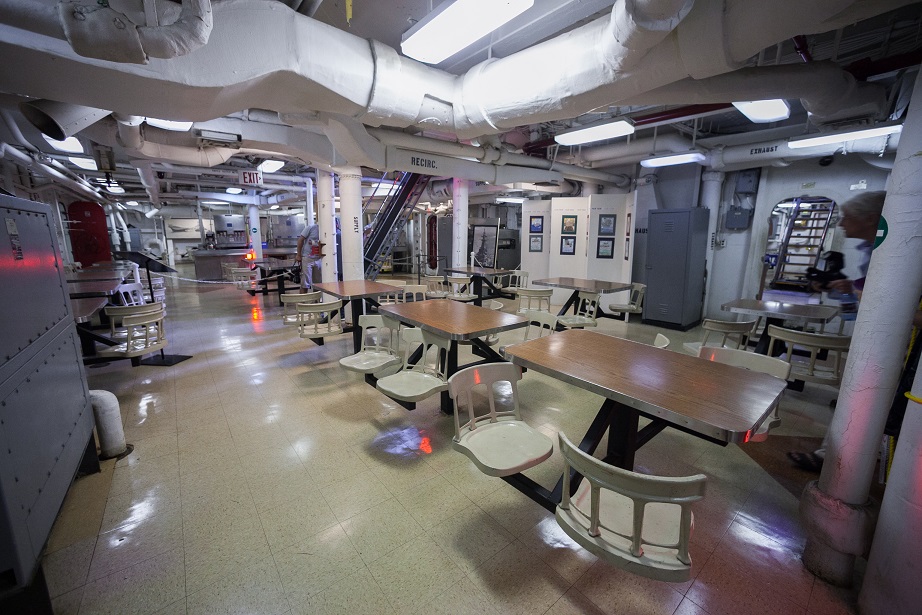
    The enlisted mess decks are the largest dining area onboard the Mighty Mo. While underway, four meals a day were served: breakfast, lunch, dinner and midnight rations (or MIDRATS). During WWII and the Korean War, long wooden tables and benches were set up for meal service. These tended to slide or collapse in heavy seas. The McDonald’s-style tables you see today were added as part of the ship’s mid-1980s modernization. Unlike the earlier folding tables and benches, these are welded to the deck to keep them secured even in the roughest seas.

    Facebooktwitterpinterestlinkedin
  • Crew's Room Exhibit

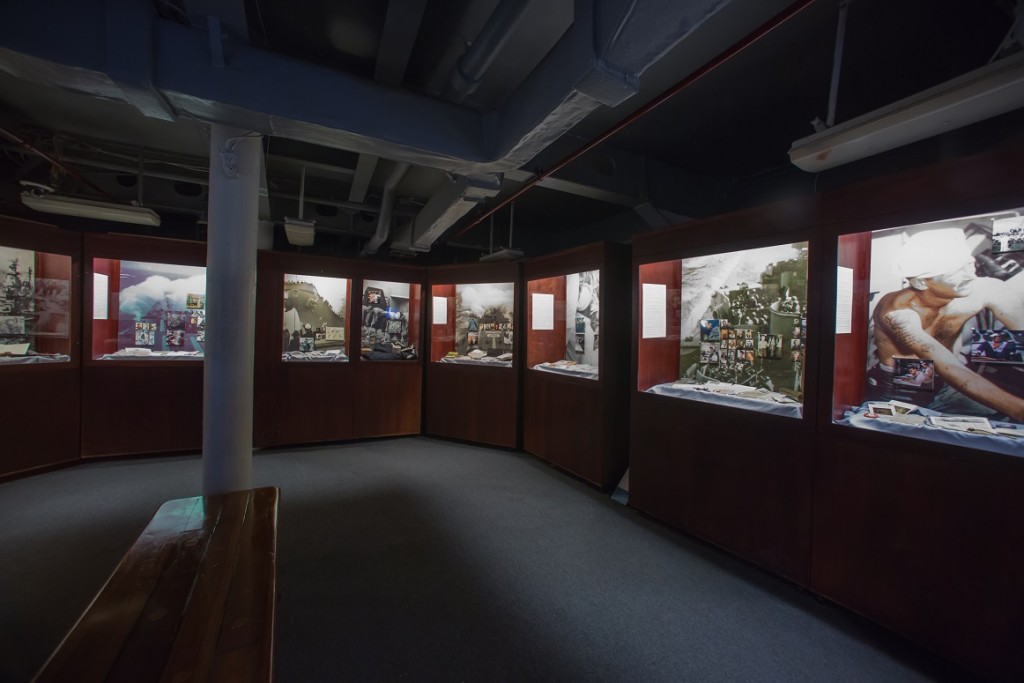
    The storied history of the USS Missouri is reflected here in personal keepsakes collected and donated by former crewmembers, and are reminders of service shared and history experienced first-hand. Start at the display case adjacent to the TV and move chronologically to your left through all the eras of the ship’s history from launch until final decommissioning.

    Facebooktwitterpinterestlinkedin
  • Big Mo Snack Shop

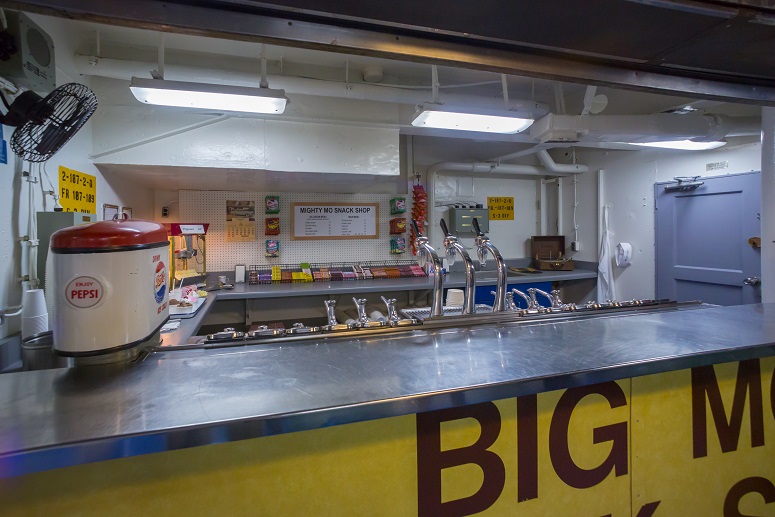
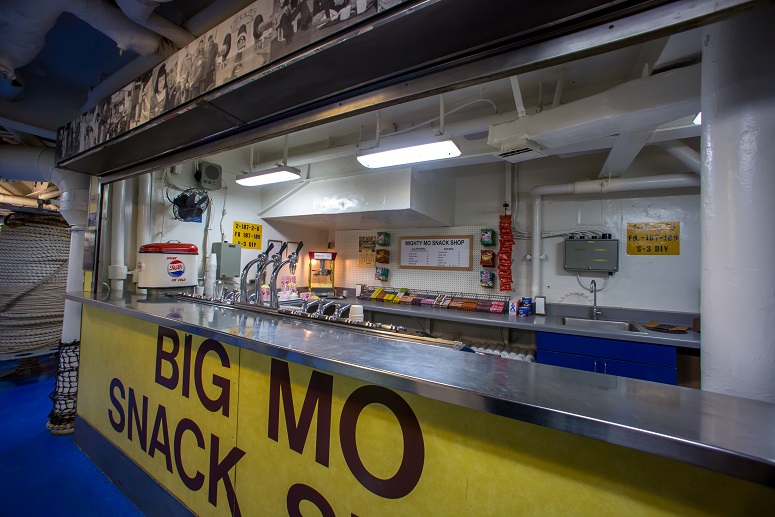
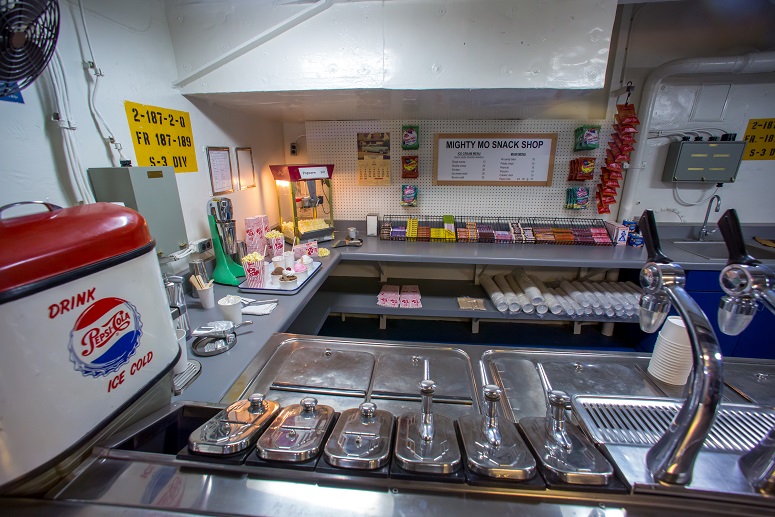
    “Gedunk” refers to ice cream, candy, potato chips, and other snack foods, as well as to the place on a ship where these items were sold. On board the Missouri during the Korean War, that place was known as the Big Mo Snack Shop and has now been restored to look as it did in the 1950’s. Sailors enjoyed soda floats, ice cream, candy and other snacks here during their down time. During the Missouri’s modern era, the soda fountain was removed, but the Snack Shop continued to offer a welcome variety of “geedunk.”

    Facebooktwitterpinterestlinkedin
  • Chief Petty Officer’s Legacy Center & CPO Mess and Quarters

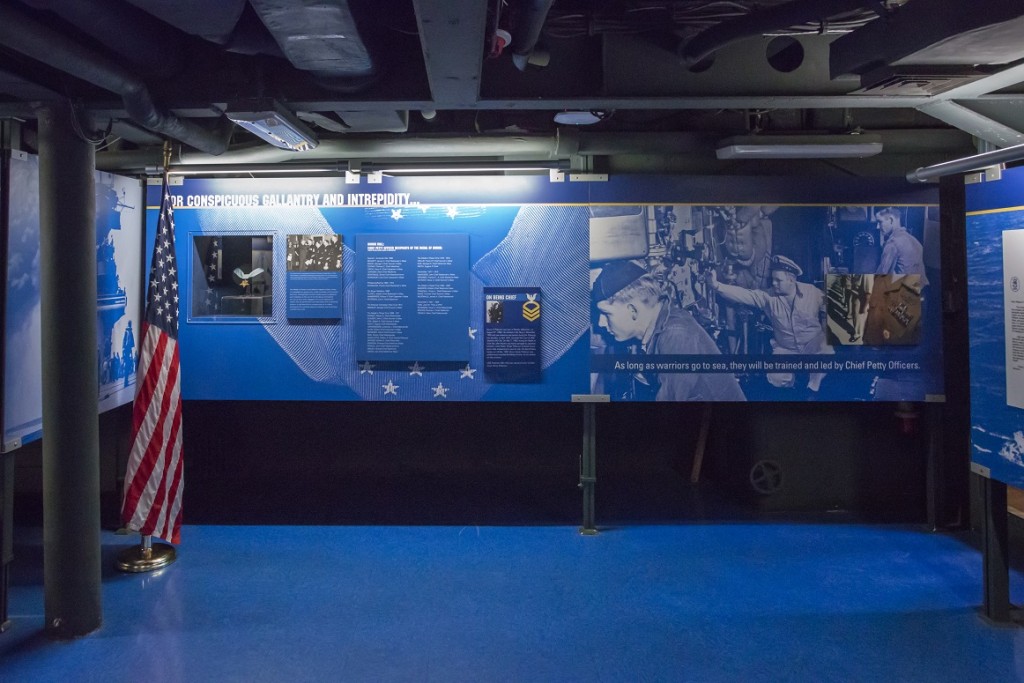
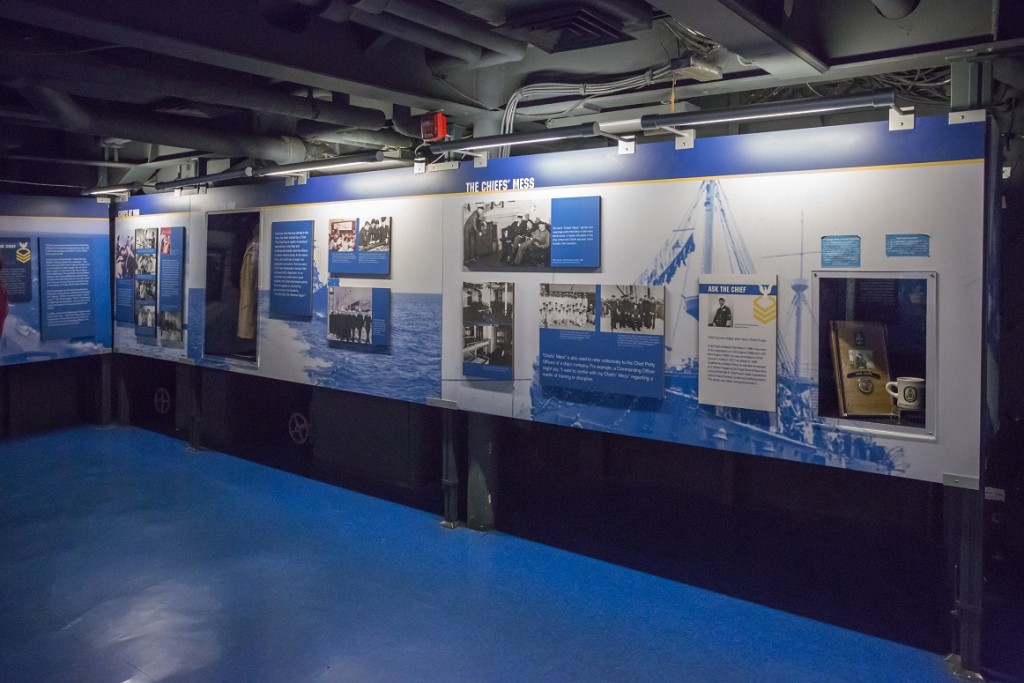
    Chief Petty Officers, called the “Backbone of the Navy,” are the senior enlisted personnel aboard with decades of experience and a rank steeped in tradition. “Ask the chief” was a common phrase heard aboard the Mighty Mo. Chief’s served as mentors, problem solvers and advisors for young officers and sailors alike, and, if necessary, disciplinarians for the enlisted sailors they led. The CPO Legacy Center was created to honor their legacy and the vital role they serve within the U.S. Navy.

    DID YOU MO?: Each year the Battleship Missouri hosts the Chief Petty Officer Legacy Academy for CPO selectees. They train, learn and live aboard, striving to earn the right to hold the coveted rank of Chief Petty Officer. Their graduation ceremony is held on the fantail, directly above this space.

    Facebooktwitterpinterestlinkedin
  • Crew’s Galley & Truman Line

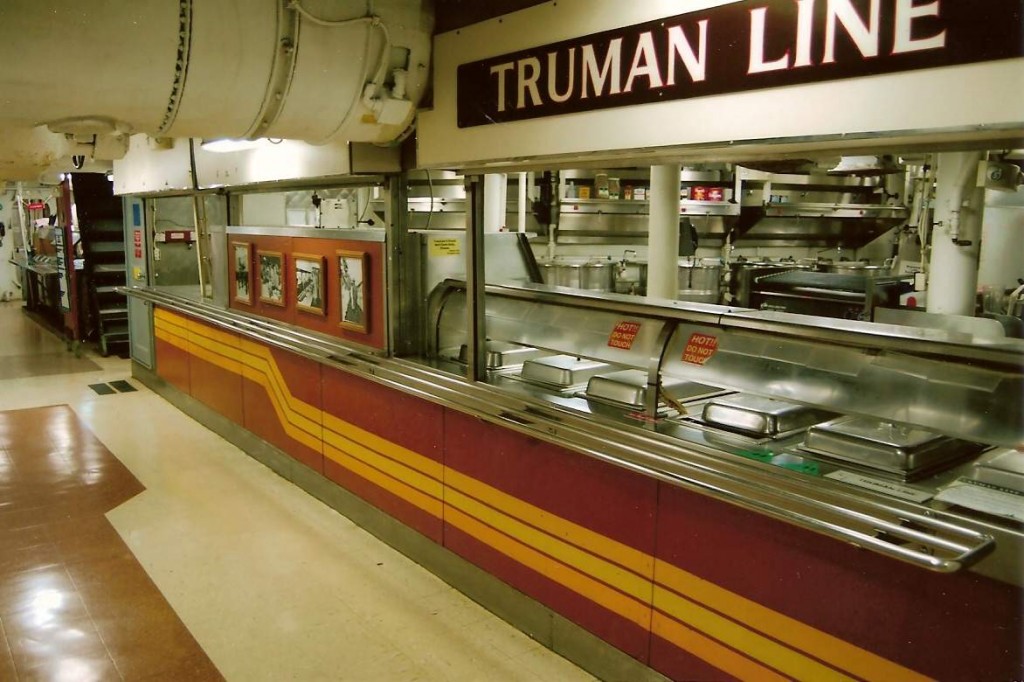
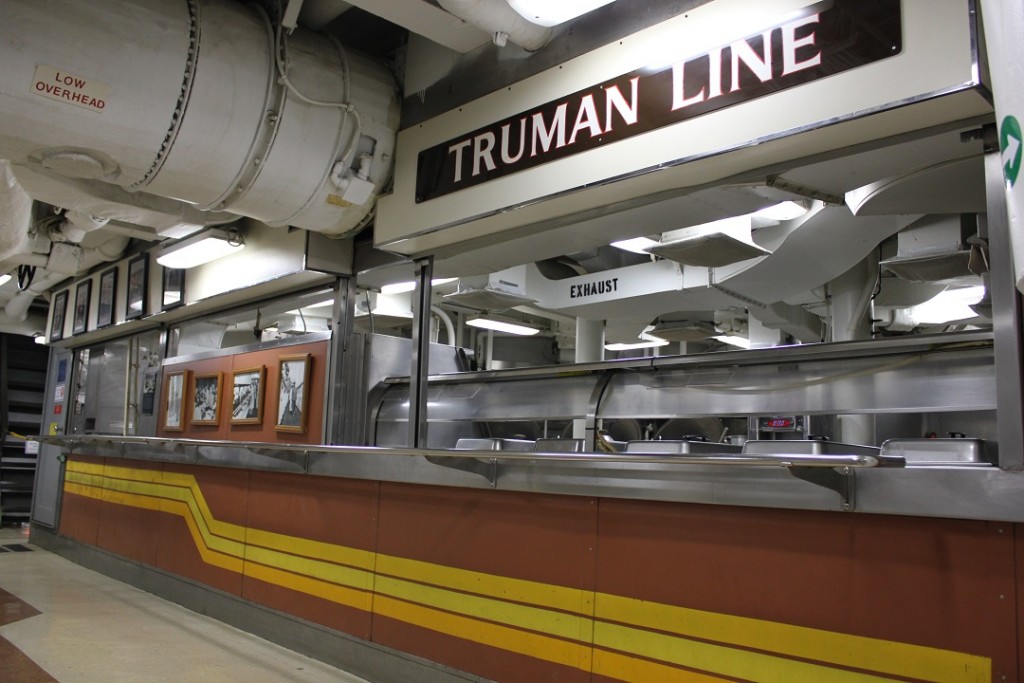
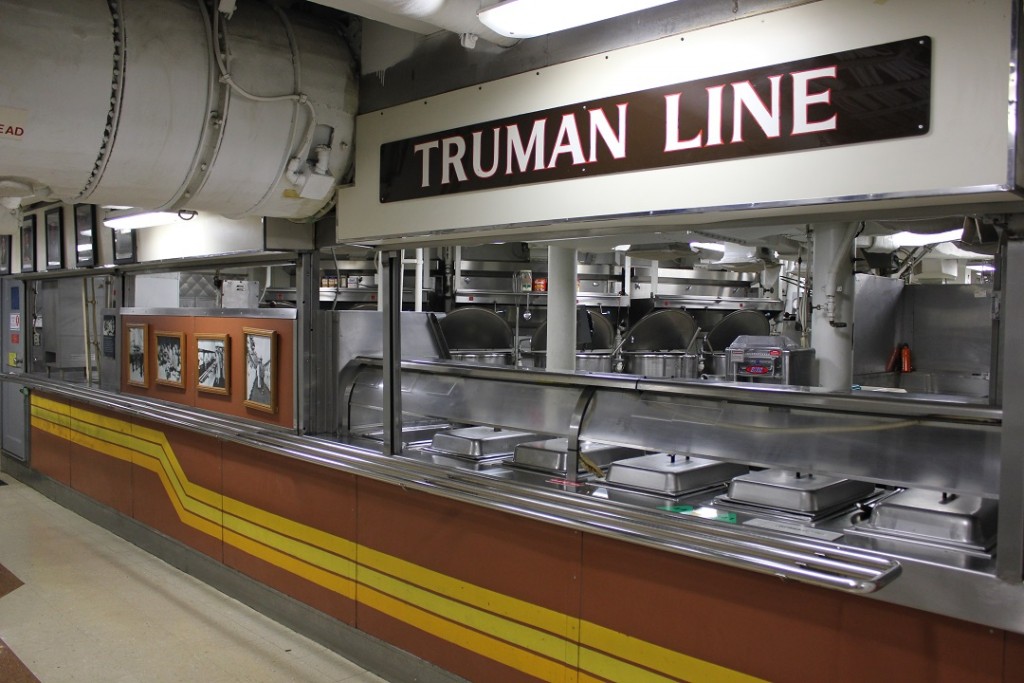
    There are two chow lines on board, the Missouri Express line on the port side and the Truman Line on the starboard side. The Missouri Express was where sailors could get fast food, such as hamburgers, hot dogs, french fries, soup, salad and sandwiches. The Truman Line provided more selection and complete meals. The enlisted galley produced over 5,000 crew rations a day during her modern era.

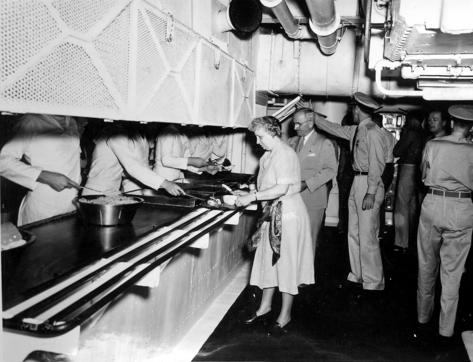
    The Truman Line was named in honor of President Harry S. Truman, whose daughter Margaret christened the Missouri in 1944, and who was welcomed aboard by the crew in 1947, along with his wife Bess and other VIP’s during a 12-day return cruise to Norfolk, Virginia following a conference in Rio de Janeiro, Brazil.

    The Truman Family made it a point to have meals with the officers and crew during the cruise, endearing them to the entire crew. Pictures of the Truman family taken during this cruise are displayed along the Truman Line.

    DID YOU MO?: Navy tradition says, the quality of food being served aboard will diminish the longer a ship is out to sea. As fresh food is quickly consumed, the cooks have to rely on canned and dried goods and culinary ingenuity until resupply arrives.

    Facebooktwitterpinterestlinkedin
  • Bread Room & Bakery

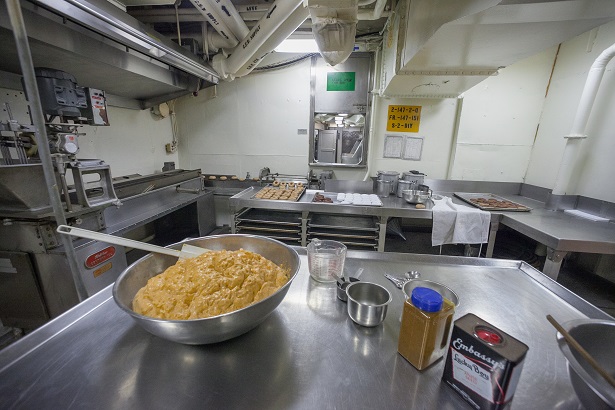
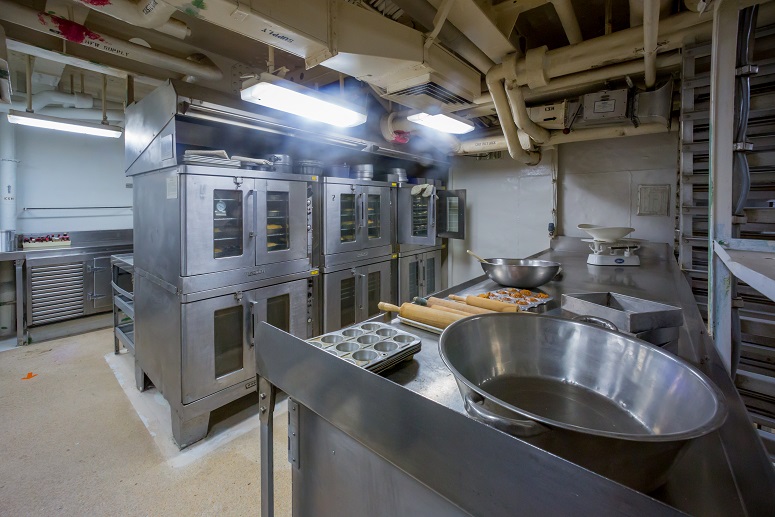
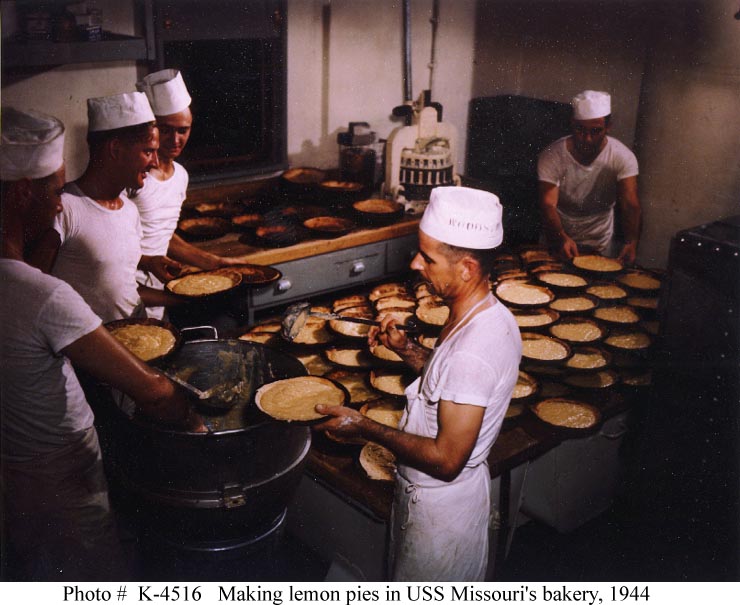
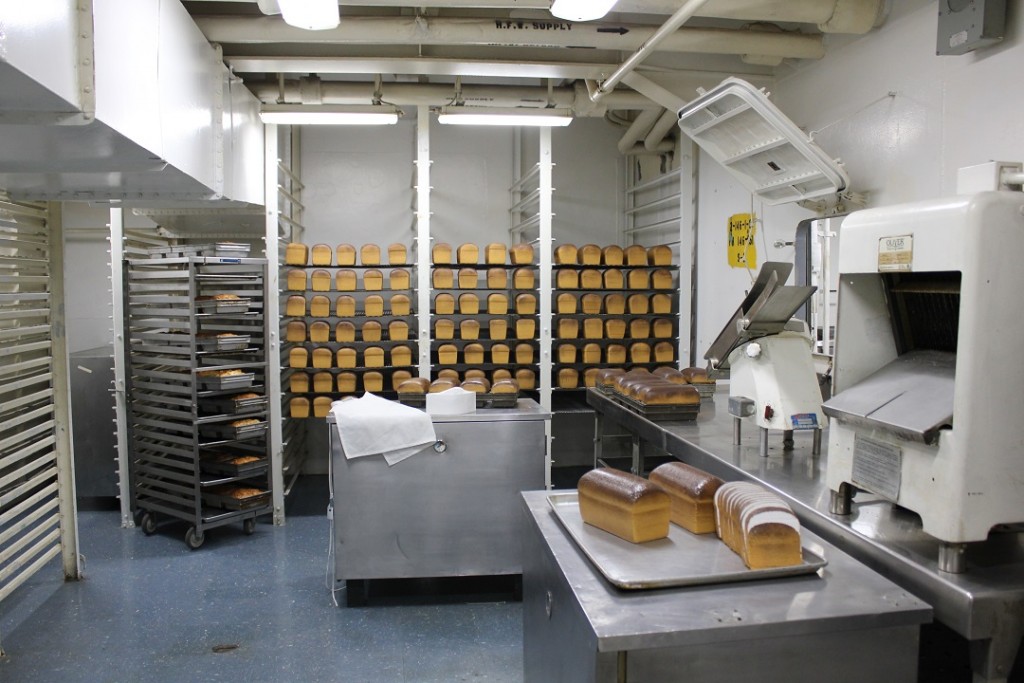
    The ship’s bakers baked 200 loaves of fresh bread daily while underway during the modern era, as well as biscuits, pies, and donuts. The days of sailing ships and stale, bug-infested bread was a thing of the past as the heavenly fragrance of fresh baked bread wafted through the passageways of the Mighty Mo.

    After you pass through the Bread Room and Bakery, don’t forget to check out the Donut Shop around the corner to your left and get a glimpse of the Missouri Express line just beyond.

    DID YOU MO?: All the baked products on display are foam replicas made by volunteers and our Curatorial staff. As enticing as they look, we must discourage you from trying to sample them for obvious reasons.

    Facebooktwitterpinterestlinkedin
  • USMC Berthing

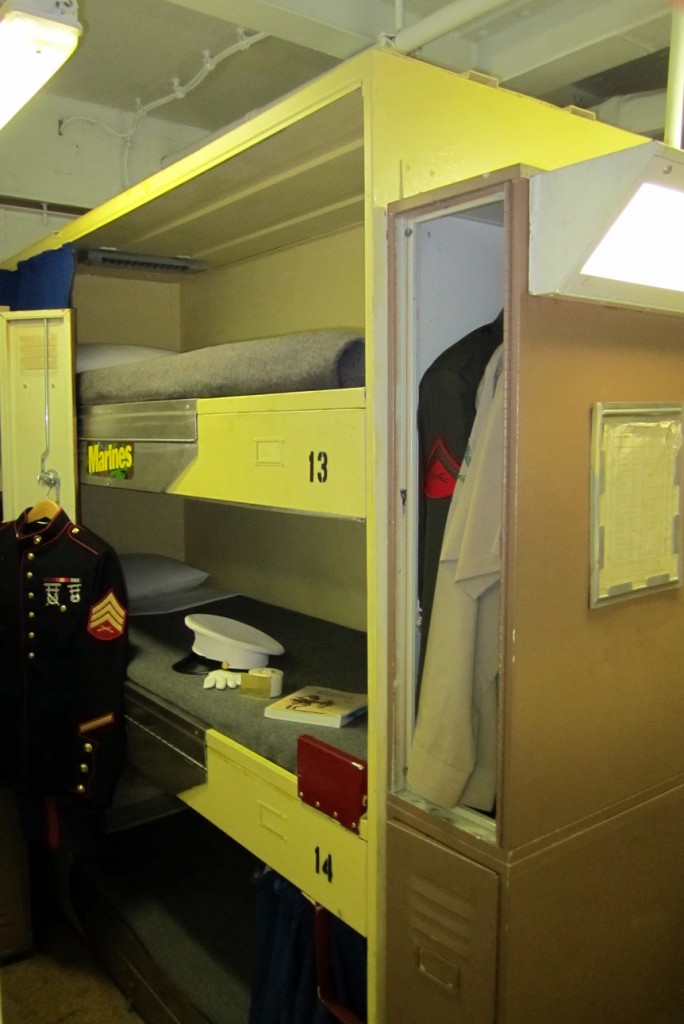
    This is one of two USMC berthing areas for enlisted members of the Missouri’s Marine Detachment (MarDet) who functioned as the ship’s primary security force, and also performed ceremonial duties. This berthing space is located in close proximity to the MarDet “War Room” adjacent to the Truman Line and the USMC small arms locker by the Bread Room.

    DID YOU MO?: The 5” gun mount operated by the ship’s MarDet is located on the 02 Level, just above the Surrender Deck.

    Facebooktwitterpinterestlinkedin
  • Machine Shop

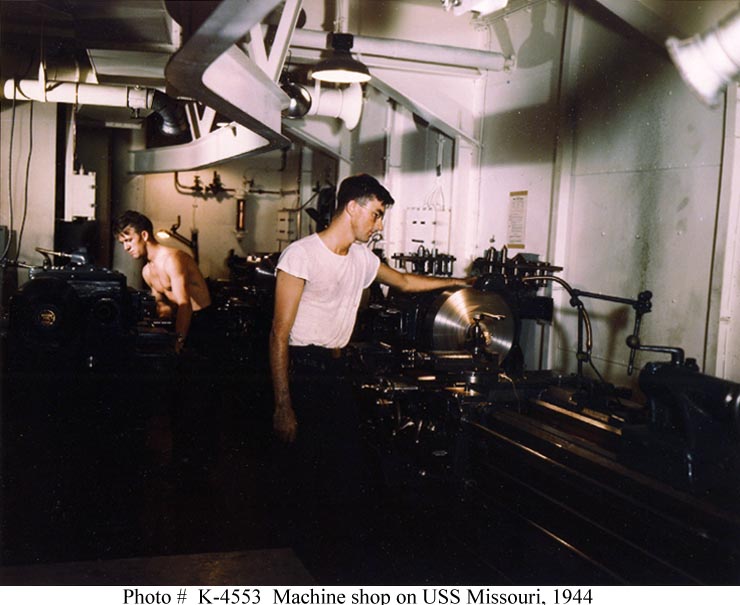
    “American Made” is the painted motto visible in the ship’s machine shop, reflecting the crew’s pride in their ability to repair or fabricate whatever was needed aboard. The highly skilled crew in the Machine Shop, and other shops nearby, could machine, weld, bend pipes, work sheet metal, fabricate and repair just about anything that was needed.

    DID YOU MO?: The enormous lathe visible through the open doorway is one of the many original 1940’s-era equipment still on board. Due to its massive size, it had to be installed while the ship was being constructed and the rest of the ship was built around it.

    DID YOU MO?: The “American Made” eagle mural isn’t just patriotic. U.S. warships are considered U.S. soil, so anything fabricated onboard while the ship was in service is considered “Made in the USA.”

    Facebooktwitterpinterestlinkedin
  • Crew Berthing

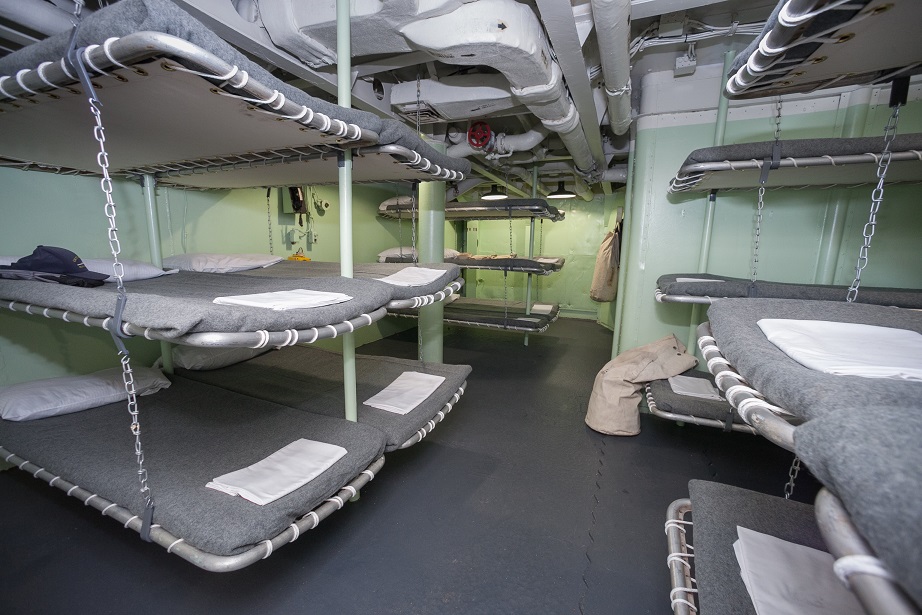
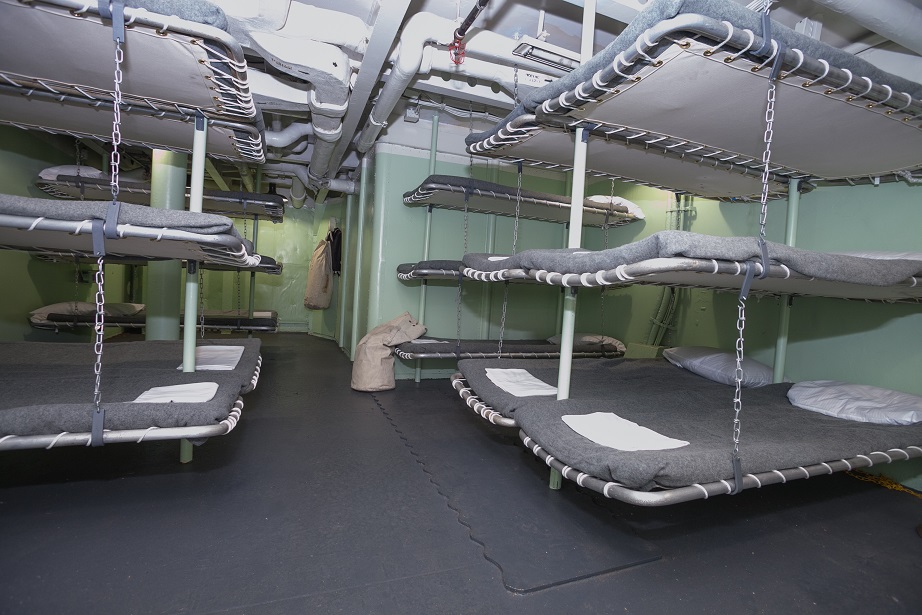
    Sleeping areas for the enlisted crew on a ship are called berthing spaces. The bunks you see on the Second Deck of the Missouri were installed in the 1980s, and are similar to what you would find on an active warship today. They are referred to as “coffin racks” due to their similarity in dimensions. Each one has a reading light, privacy curtain, and an Emergency Escape Breathing Device (EEBD) to provide oxygen should the sailor have to evacuate a smoke filled berthing space. There are approximately 1,500 of these bunks on the ship occupying spaces on three different deck levels each one designated for a particular department or division. Storage lockers for uniforms and personal effects are located beneath or near their rack.

    DID YOU MO?: No woman ever served aboard the Battleship Missouri. Why? Women were not authorized to serve on combatant warships in the U.S. Navy until 1993 – one year after the Missouri was decommissioned.

    Facebooktwitterpinterestlinkedin
  • Post Office

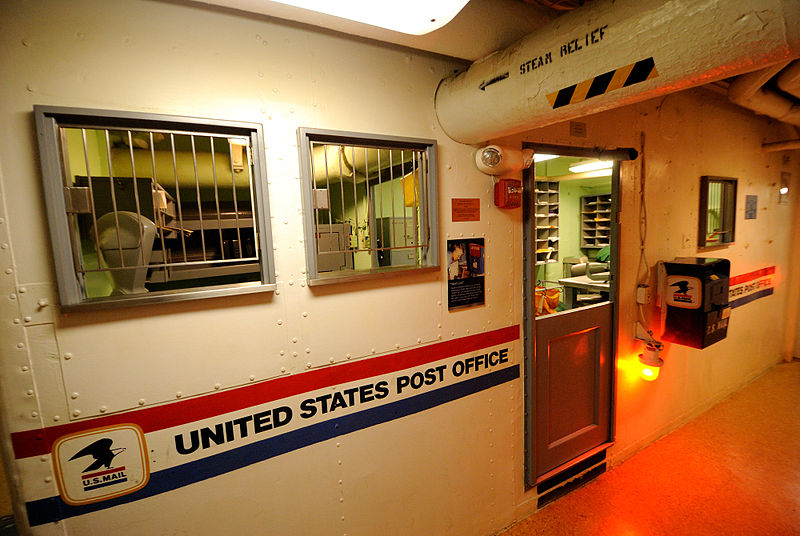
    One of the vital services provided to the crew was a full service onboard U.S. Post Office. Long before E-mail, cell phones and “FaceTime” became commonplace, there was the welcome announcement of “Mail Call” and the arrival of hand-written letters and “care packages,” from home which was a huge boost to the crew’s morale. The Post Office had in-port and at-sea hours where incoming and outgoing mail was accepted, sorted and distributed.

    DID YOU MO?: When ships were resupplied at sea during Underway Replenishment (UNREP), cargo, ammunition and fuel was received, but mail, movies and news from the homefront was also exchanged.

    Facebooktwitterpinterestlinkedin
  • Dental Facilities

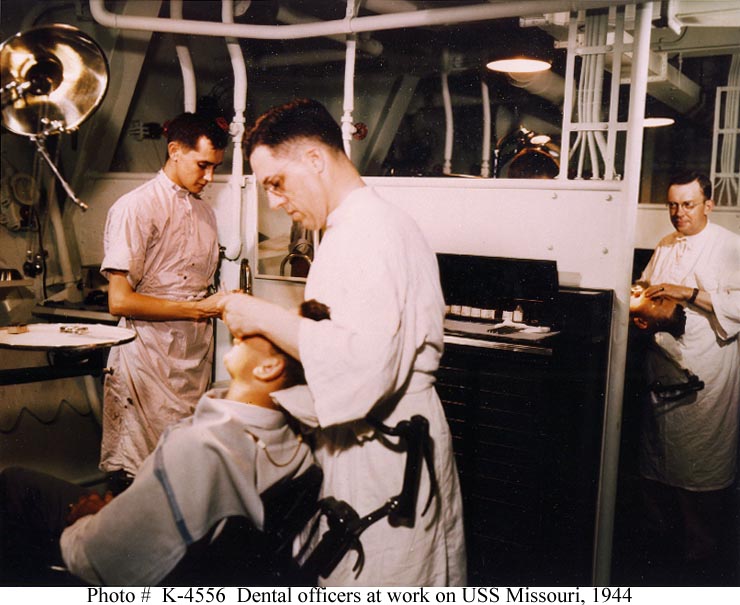
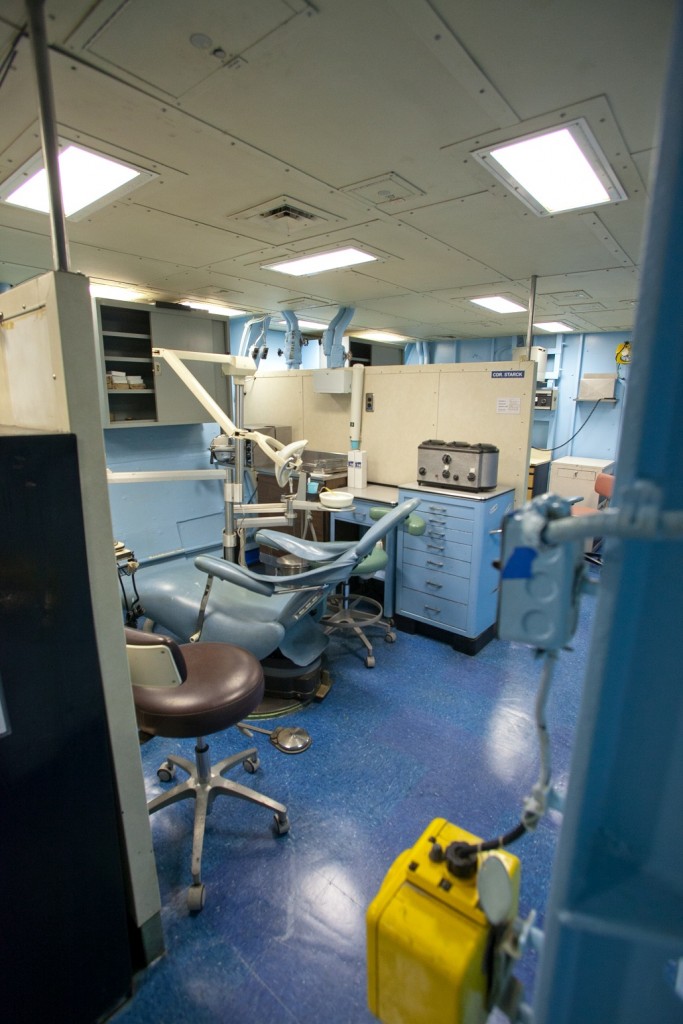
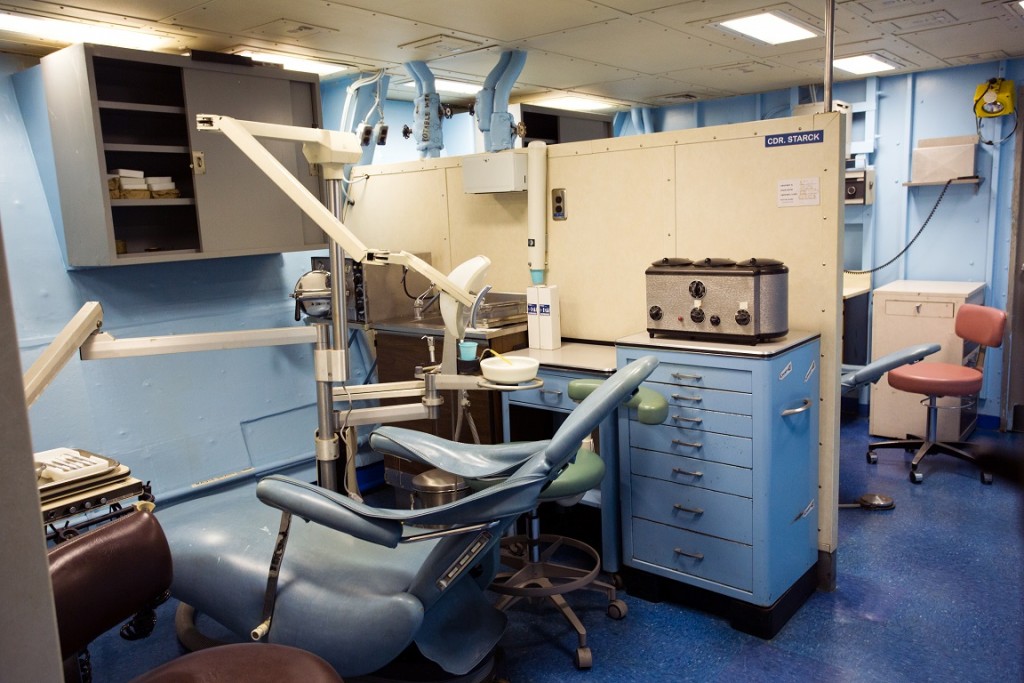
    The on board dental clinic was probably the least popular place for a sailor to find himself aside from the brig (jail). While dental care may have been an unpleasant chore that the crew had to endure, it was necessary to maintain the health and readiness of the entire crew. No one was exempt. Dental problems can distract from a sailor’s ability to perform his vital duties and can impact the efficient operation of the entire ship.

    The ship’s two Dental Officers and their Dental Technicians routinely tackled anything a land-based dental facility was capable of dealing with. Dentures, bridges and other prosthetics could be custom made in the adjacent Prosthetics Lab.

    DID YOU MO?: During General Quarters (battle stations), the Dental Officers would each staff a Battle Dressing (triage) Station on board the ship and be ready to receive wounded sailors.

    Facebooktwitterpinterestlinkedin
  • Computer Learning Center

    When the Mighty Mo was re-commissioned in 1986, computer technology was still new to many sailors aboard. The Computer Learning Center was established to bring the crew up to speed on everything from floppy disks to software.

    The MONET (short for Missouri Network) was created in January of 1989 and is considered the first shipboard intranet in the U.S. Navy. This network connected all the personal computers on the ship and allowed sailors to E-mail each other and share data. While this seems like a basic technological function today, at the time it was very innovative. Even WWII battleships can learn new tricks!

    DID YOU MO?: Lt. Commander Jim Bancroft, the ships meteorologist in 1989 and a dedicated computer enthusiast, is credited with setting up MONET.

    Facebooktwitterpinterestlinkedin
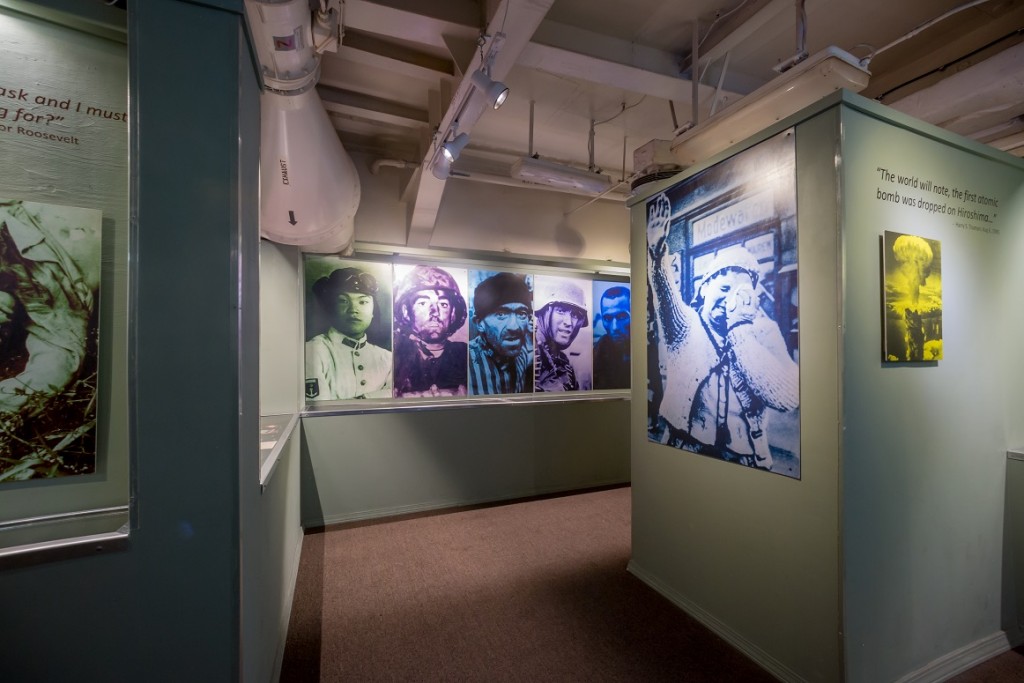
  • Exhibit: The War that Changed the World

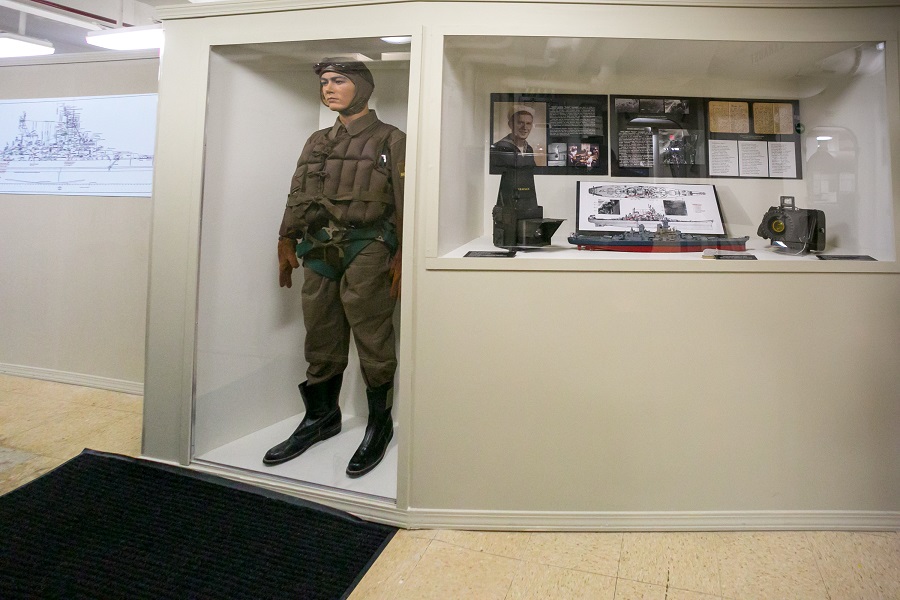
    Unless you experienced World War II first-hand, you will have difficulty comprehending the tragedy and significance of this war. In this exhibit, the tangible reminders of war and personal keepsakes of war’s experience, will give you a personal connection, as will the music of the era and the specially edited 20-minute presentation of History (channel’s) 10-part documentary series, World War II in HD.

    We encourage you to take the time to explore this exhibit. Later, when you stand on the Surrender Deck where World War II formally ended, you will have a clearer understanding.

    Facebooktwitterpinterestlinkedin
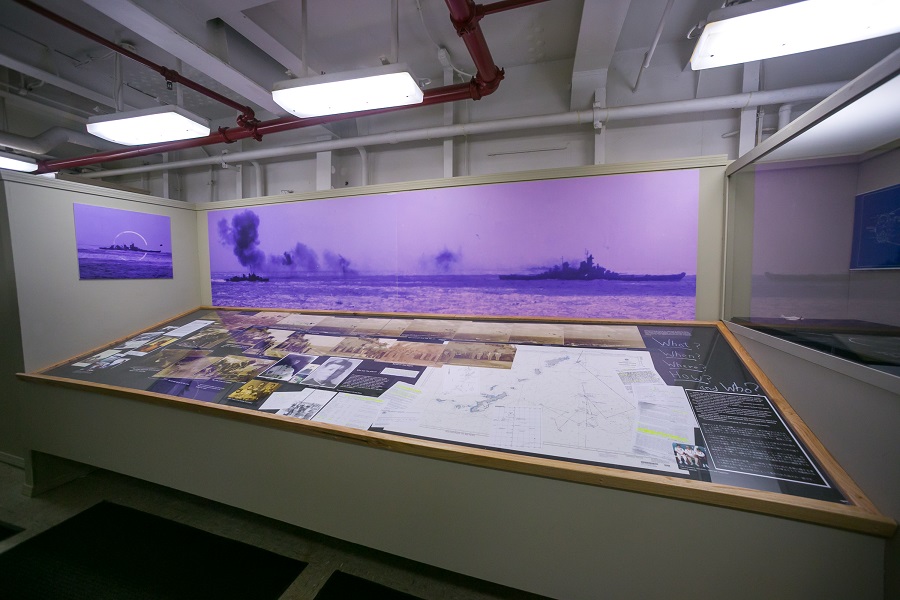
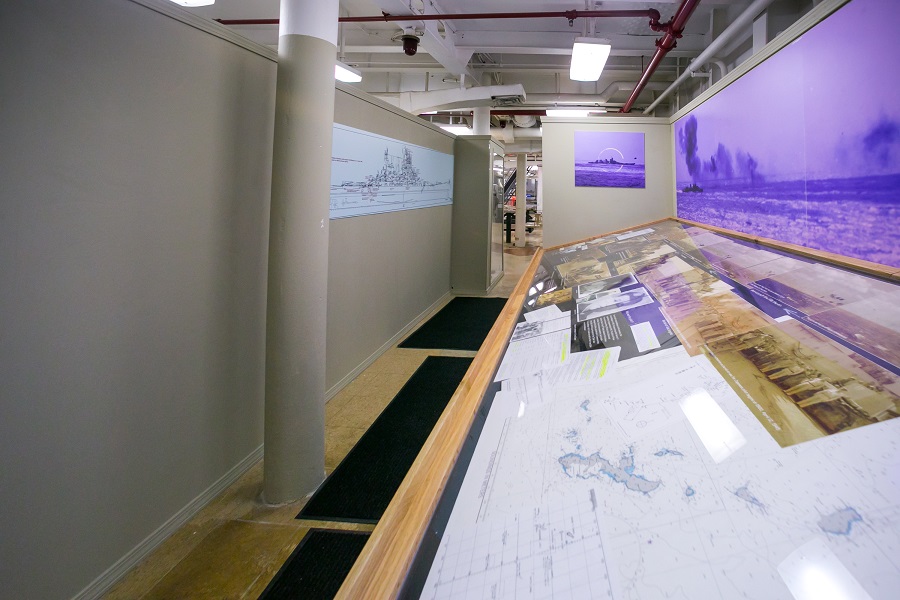
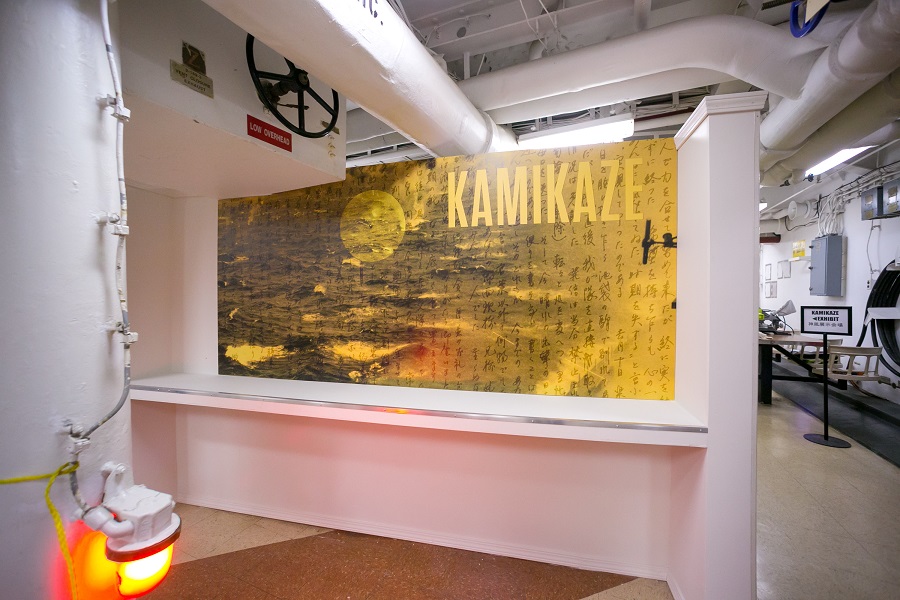
  • Exhibit: KAMIKAZE

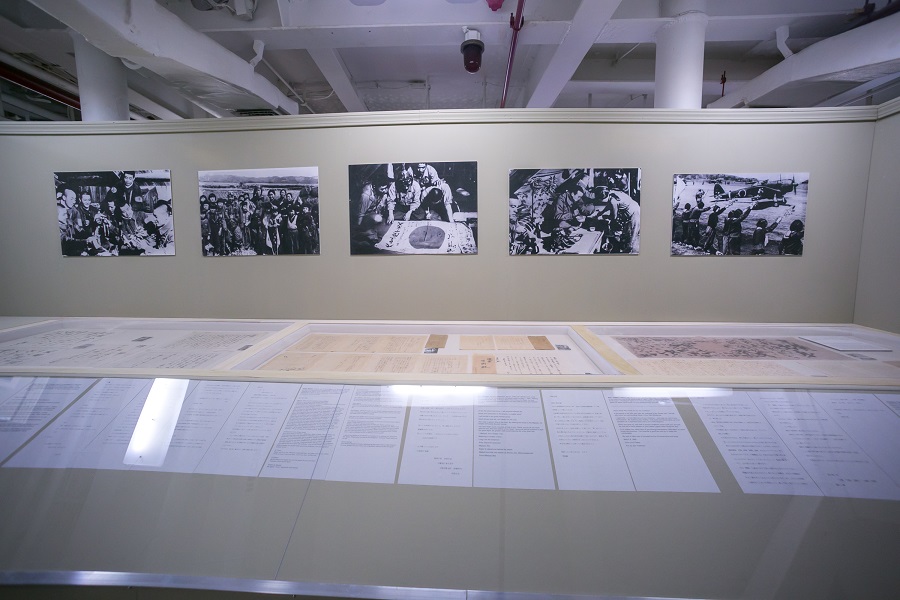
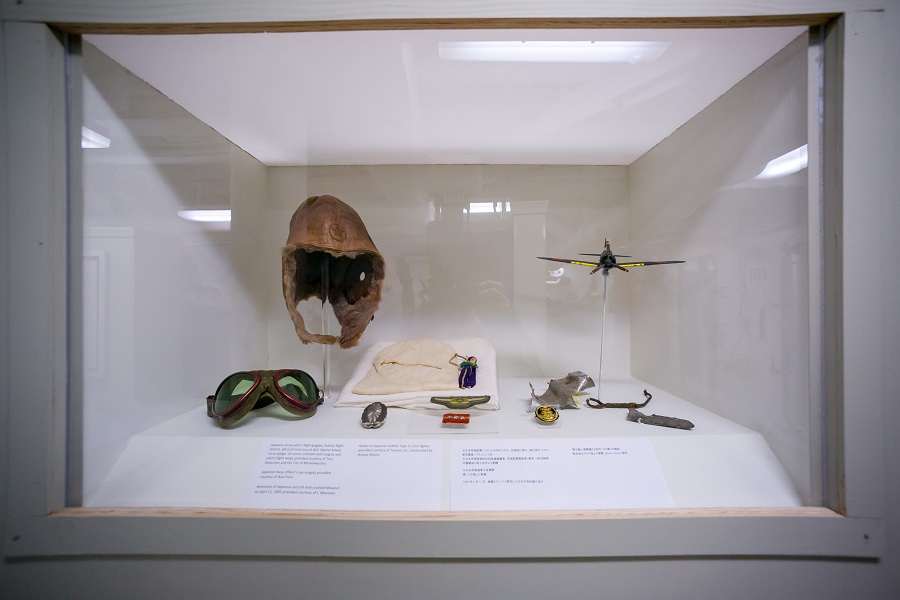
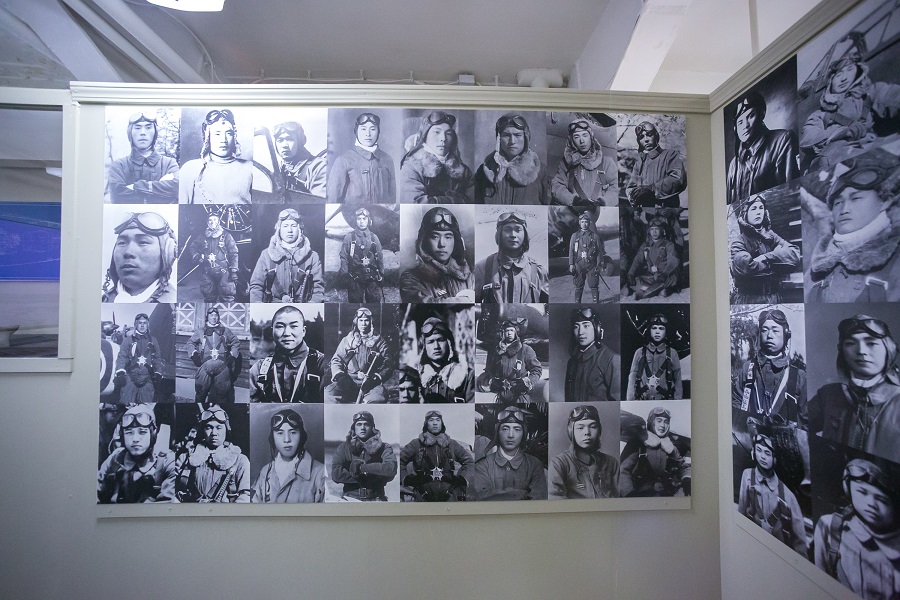
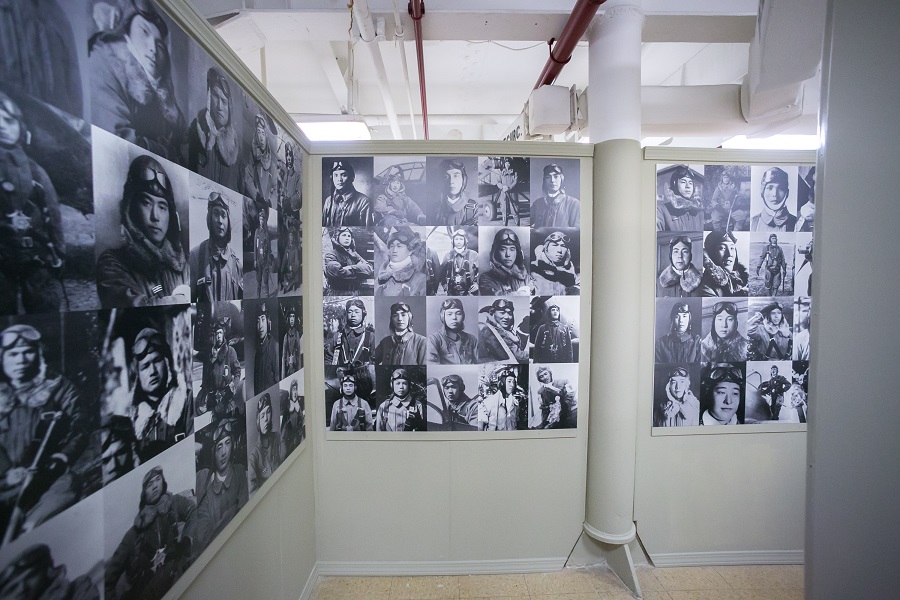
    On April 11, 1945 a Japanese Zero, a “Kamikaze,” attacked and struck the Missouri on the stern quarter, sending flaming wreckage and the body of the pilot aboard. This exhibit is an exploration of the research into that attack, the search for the identity of the pilot and his formal burial-at-sea provided by the crew of Battleship Missouri.

    The exhibit also offers a rare glimpse into the final thoughts of Special Attack Force pilots via unprecedented access to last letters written to parents and wives, sweethearts and children. We offer this special exhibit presentation in partnership with the Chiran Peace Museum in Japan.

    Facebooktwitterpinterestlinkedin